

Hardscaping Design Ideas That Add Luxury and Value
A beautiful yard rarely earns that description from plants alone. The spaces that feel polished, expensive, and deeply usable almost always rely on hardscaping. Stone paths that guide the eye. A terrace that turns an awkward backyard into an outdoor room. Retaining walls that solve grade problems while looking intentional. Done well, Hardscaping gives a property structure, permanence, and a sense of finish that softscape alone cannot deliver.
It also tends to pay back in more than one way. There is the obvious lifestyle upgrade, which is easier entertaining, less mud, fewer maintenance headaches, and more days spent outside. Then there is market perception. Buyers respond quickly to outdoor spaces that look organized, durable, and thoughtfully designed. A plain lawn can read unfinished. A yard with integrated paving, lighting, planting pockets, and comfortable transitions feels like a complete property.
The tricky part is that luxury in the landscape does not come from throwing money at expensive materials. It comes from proportion, restraint, and smart coordination between paving, plantings, drainage, lighting, and long-term care. I have seen modest patios look custom because they were placed exactly where the light was best in late afternoon, with clean edge details and planting that softened every corner. I have also seen very costly stonework feel disappointing because it ignored scale, runoff, and how people actually move through the yard.
What makes hardscaping feel luxurious
Luxury outdoors is often quiet. It is the absence of clutter. It is generous circulation space around a dining table. It is a step that feels safe underfoot at night because low lighting was built in from the start. It is a material palette that stays consistent from the front walk to the backyard entertaining area, rather than changing every twenty feet.
One of the strongest landsaping ideas for any property is to think of hardscape as architecture, not decoration. The same principles that make interiors feel high-end apply outside. Repetition creates calm. Good alignment makes a space feel intentional. Material changes should signal a purpose, not just variety for its own sake. If the front entry uses a cool gray stone, the backyard might echo that tone in a slightly rougher finish rather than introducing a completely unrelated paver.
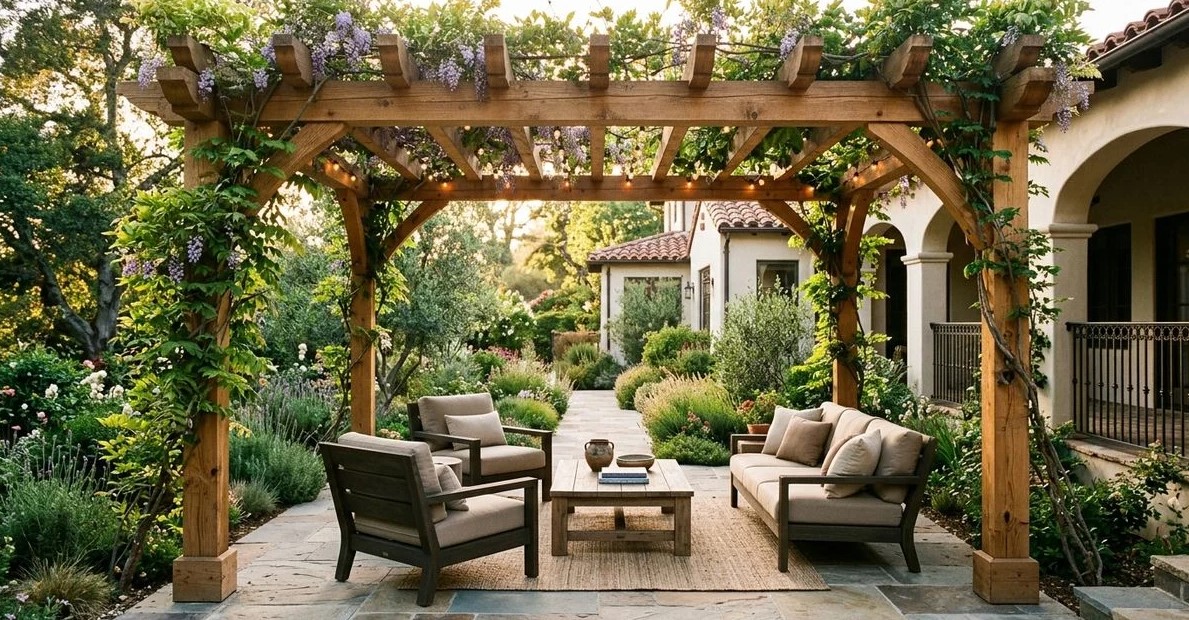
Proportion matters just as much. Oversized patios in small yards can feel harsh and hot, while tiny disconnected pads make a property look piecemeal. In practice, the most successful layouts leave enough room for movement, furniture, and planting beds that break up hard lines. A patio needs negative space around it. Walls need shadows and texture. Even the best masonry benefits from nearby Native plants, low shrubs, or small trees that help it sit naturally in the site.
Patios that function like real rooms
The patio is usually the center of gravity in luxury outdoor design, and for good reason. It is the platform that makes the yard useful. If you want immediate impact and measurable value, start there.
A luxury patio is not simply larger. It is zoned. There is a clear area for dining, a separate zone for lounging, and enough distance between the two that chairs do not collide when guests stand up. In many suburban backyards, professional landscaping Arcadia that means a patio somewhere between 300 and 700 square feet feels balanced, though the exact size depends on lot width, home scale, and whether additional features like an outdoor kitchen are planned.

Material selection changes the feel dramatically. Natural stone, especially limestone, bluestone, or travertine, tends to read as more refined than basic concrete pavers, but a well-chosen paver can still look excellent if the color is restrained and the installation is crisp. Large-format slabs often feel more contemporary and expensive because they reduce visual noise. Tumbled materials create a softer, more traditional character. Finish matters too. Around pools and sunny exposures, cooler, slip-resistant surfaces are worth the investment.
The detail that separates average patios from truly polished ones is edging and transition. A patio should meet the house cleanly. If there is a step down, it should feel wide and gracious, not like an afterthought. Planting beds around the perimeter should have enough depth to soften the paving with texture and seasonal change. This is where Gardening and Hardscaping need to work together. A lush border can make stone look richer. Without that balance, even premium materials can feel stark.
Walkways that create arrival
The front walk is one of the most underrated investments on a property. It frames the first impression before anyone reaches the door. A narrow concrete strip may be functional, but it seldom feels inviting. A properly proportioned walkway with quality materials and subtle lighting changes the whole arrival experience.
Width is the first upgrade. A main entry walk generally feels better at four feet wide than three, and five feet is often ideal if space allows. That extra width sounds minor on paper, but visually it creates confidence and generosity. Curves can be useful, but only when they respond to the site. Forced curves in a small front yard usually waste space and look fussy. Straight or gently aligned walks often appear more elegant.
Border details elevate the look without always adding huge cost. A concrete walk with a soldier-course brick edge, or a paver path framed by steel or stone restraints, can look far more tailored than a plain monolithic slab. Lighting also plays a major role. Soft, shielded fixtures that illuminate the walking surface and nearby plantings make a home feel established and secure. Bright airport-style path lights do the opposite.
Retaining walls that solve problems beautifully
Retaining walls are one of the clearest examples of value through necessity. Sloped yards need them to prevent erosion, create usable terraces, and manage grade changes safely. When those walls are thoughtfully designed, they become some of the strongest visual elements in the landscape.
There is a world of difference between a purely utilitarian wall and one that feels integrated into the property. Segmental block systems can work well, especially for long structural runs, but the best results usually come from minimizing the visible pattern and using capstones that relate to nearby paving. Natural stone veneer, poured concrete with careful formwork, or dry-stacked stone can all read as more custom depending on the architectural style of the house.
A retaining wall should rarely stand alone. Steps, seat walls, planting ledges, and lighting make it part of a complete composition. In one hillside project, the most effective move was not increasing wall height, it was breaking one tall wall into two lower terraces with a planting band between them. That approach looked more expensive, even though the total cost was similar, because it added depth, greenery, and a more graceful scale.
Tree Care matters here more than many homeowners realize. Existing roots can complicate excavation, and careless wall placement can damage mature trees that give the yard much of its value. It is often smarter to shift a wall a few feet than to cut into the root zone of a healthy shade tree. Losing a mature tree can erase the visual gain of the new work for years.
Fire features, seat walls, and outdoor kitchens
Some hardscape additions improve function so much that they change how often the yard gets used. Fire features extend evenings and shoulder seasons. Seat walls reduce the need for bulky furniture. Outdoor kitchens make a patio feel like an entertainment destination rather than a nice place to stand.
The key is avoiding novelty. A fire pit dropped in the middle of a lawn rarely adds luxury. A fire feature anchored to a lounge area, with proper clearances and comfortable seating distances, can become the best part of the yard. Gas fire tables and linear fireplaces tend to feel cleaner and easier to manage than wood-burning pits, though wood still appeals to some homeowners for atmosphere.
Seat walls are one of the smartest multipurpose elements in Hardscaping. They define edges, provide casual seating, and help patios feel enclosed without making them cramped. In smaller yards, they are often better than trying to squeeze in too many chairs. If the wall doubles as a retaining element or planter edge, the investment works even harder.
Outdoor kitchens deserve realism. A built-in grill station with counter space, storage, and perhaps a refrigerator is useful if the homeowners truly cook outside. A full kitchen with sink, bar seating, and multiple appliances can be impressive, but it also brings higher utility costs, more maintenance, and weather exposure. The luxury move is not the biggest setup, it is the one that suits the way the household entertains.
Water features with restraint
Water can bring an extraordinary sense of luxury to a landscape, but only when it is proportionate and easy to maintain. The pleasant sound of moving water can soften traffic noise and add calm to a courtyard or patio. The wrong feature, however, becomes a maintenance burden fast.
For many properties, a simple recirculating fountain or a low-profile spillway basin is the sweet spot. These features offer movement and sound without demanding the upkeep of a large pond. Placement matters. Water should be near a seating area or entry path where it can be appreciated, not buried in a remote corner where it becomes background equipment.
In dry climates, this is where judgment matters. Clients sometimes worry that a water feature conflicts with Xeriscaping or Water-wise irrigation principles. In practice, a recirculating system with responsible maintenance can coexist with a drought-conscious landscape far better than a large thirsty lawn. The point is to use water deliberately, not lavishly.
Driveways and motor courts that lift curb appeal
If the budget allows, driveway upgrades can have Arcadia California landscapers an outsized effect on perceived value. This is especially true for homes where the driveway dominates the front elevation. Luxury here usually comes from texture and pattern, not from excessive ornament.
Permeable pavers, high-quality concrete with saw-cut scoring, cobble bands, or a simple border treatment can transform a flat expanse into something refined. A circular or semi-circular drive can feel grand on the right lot, but in tighter spaces it often creates awkward leftover planting areas and too much paving. A cleaner approach may be a straight drive with a widened parking court near the garage and a strong planting plan to soften edges.
Drainage is essential. A premium driveway that sends runoff toward the garage or front walk is not an upgrade for long. Good hardscape always manages water first and aesthetics second, even if the drainage work ends up invisible.
Marrying hardscape with planting for a richer result
The most successful projects never let stone and plantings compete. They support each other. Hard lines need softness. Plants need structure. A luxury landscape feels rooted because the transitions are handled well.
This is where Native plants, Mulching, and Garden Mulching make a huge difference. Native plants often adapt better, require less water once established, and help a property feel connected to its region rather than imported from a catalog. Mulching gives planting beds a finished look, moderates soil temperatures, and suppresses weeds, but the material should fit the design. Shredded hardwood mulch is practical and common. Gravel mulch can look sharper in modern or arid settings, though it must be used carefully around trees and in hot exposures.
Low-maintenance gardens are not plant-free gardens. They are plantings designed with mature size, irrigation zones, and seasonal performance in mind. A stone patio bordered by layered grasses, evergreen structure, and a few flowering accents will usually age better than a bed packed with high-maintenance annual color. If the goal is long-term value, choose plants that will not outgrow their space and swallow the hardscape in three seasons.
A few combinations consistently work well:
Designing for less water and less work
Luxury used to be associated with large lawns and intensive upkeep. That has changed. More homeowners now want outdoor spaces that look refined without demanding constant irrigation, fertilizing, edging, and seasonal replacement. That shift has made water-wise design not just practical, but aspirational.
Hardscaping plays a big role in this. Expanding patios, paths, and gravel courtyards can reduce lawn area and cut water use significantly. Water-wise irrigation systems, especially drip lines in beds and hydrozoned layouts, prevent waste while keeping plants healthier. The visual result is often stronger because the property gains clearer structure.
Artificial turf sometimes enters the conversation here. It can be useful in very specific applications, such as a narrow side yard where natural grass struggles, a dog run, or a small play space where consistent appearance matters. But it is not a universal upgrade. Poor-quality Artificial turf looks artificial from the street and can become uncomfortably hot in summer. It also needs a proper base, drainage, and periodic cleaning. Used sparingly and in the right context, it can support a low-water plan. Used wall-to-wall, it often cheapens the landscape rather than elevating it.
For many properties, the better long-term strategy is a mix of reduced turf, more purposeful hardscape, and climate-appropriate planting. That is the heart of Xeriscaping at its best. It is not a yard full of rocks and cactus unless that suits the region and the home. It is a disciplined approach to placing the right materials and plants where they make sense.
Where to spend and where to hold back
Not every part of a hardscape project deserves the same budget intensity. Some features drive value more than others, and some upgrades are visible every day while others disappear into the background.
In my experience, homeowners get the best return when they prioritize the spaces they actually use and the views they see from inside the house. A superb backyard terrace outside the kitchen and family room matters more than an elaborate path in a side yard no one visits. Likewise, a clean, handsome front walk often does more for resale perception than an overbuilt backyard feature hidden from the street.
Here are the areas that usually justify the investment:
The place to be cautious is excessive variety. Too many paver types, wall finishes, accent bands, and decorative inserts can make a project look busy and dated. A restrained material palette nearly always reads as more expensive.
The details buyers notice, even if they cannot name them
People may not walk through a yard describing joint spacing or grade transitions, but they feel those things immediately. They notice whether the front steps seem generous or cramped. They notice whether a patio feels cool and comfortable or harsh and glaring. They notice whether the outdoor spaces connect logically to the house.
That is why the most valuable hardscape choices often happen at the detail level. Consistent riser heights on steps. Caps that overhang just enough to cast a shadow. Drain grates placed discreetly. Mulching in planting beds that makes edges look deliberate. Tree Care that preserves mature canopy instead of sacrificing it for a few extra square feet of paving. These are the marks of a project that was thought through.
A landscape that adds true luxury and value does not shout. It works. It welcomes people in, holds up through weather, reduces friction in daily life, and gives the property a sense of completion. Hardscaping is the framework that makes all of that possible. When it is designed with discipline and tied carefully to Gardening, planting, and water management, the result is not just prettier. It is more livable, more resilient, and far more memorable.