
Modern Front Yard Landscaping Ideas for Arcadia, CA
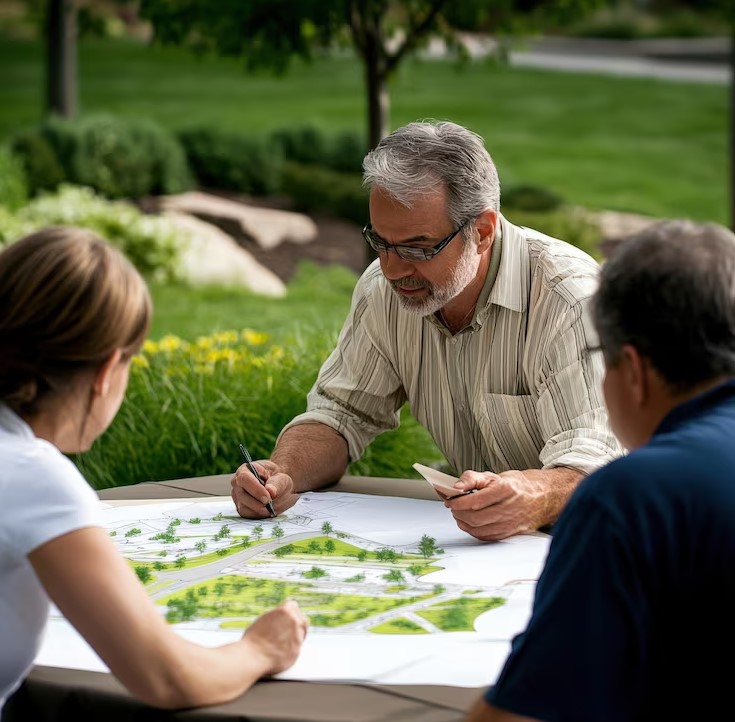
Arcadia front yards sit in a very specific sweet spot. The homes often carry real architectural presence, the lots can be generous, and the climate rewards good outdoor design while punishing lazy decisions. A front yard here is not just a patch of grass between the sidewalk and the porch. It frames the house every day, sets expectations before anyone steps inside, and quietly affects how the property feels, functions, and appraises.
That is why front yard design in Arcadia deserves more care than a quick planting plan and a new lawn. The best landscapes in this part of Southern California look composed and effortless, but they are usually built on thoughtful choices about scale, water use, sunlight, drainage, maintenance, and long-term growth. Homeowners who get it right often end up with more than curb appeal. They gain usable outdoor space, lower water demand, easier upkeep, and a stronger market position if they ever sell.
Modern landscape design inspiration for Arcadia homes tends to follow a clear direction. Clean lines, restrained plant palettes, layered materials, subtle lighting, and water-wise planting are replacing the old formula of oversized lawns, clipped shrubs, and high-maintenance flower beds. That shift is not just aesthetic. It reflects how Southern California homeowners actually live, how cities increasingly think about water, and how buyers evaluate homes.
What modern really means in an Arcadia front yard
A modern front yard does not have to look stark or cold. In Arcadia, the strongest modern landscapes usually balance structure and softness. You might see broad concrete or porcelain paver walkways paired with decomposed granite, sculptural olive trees, native grasses, and low mounding shrubs. The geometry feels intentional, but the planting still moves in the breeze and changes with the seasons.
This is where many homeowners get tripped up. They assume modern means removing all personality and reducing everything to gravel and succulents. Sometimes that works, especially on very contemporary homes. More often, it feels too severe for Arcadia neighborhoods, where architecture ranges from traditional and Mediterranean to transitional new builds. A successful design responds to the house first. The landscape should sharpen the architecture, not fight it.
On a Spanish or Mediterranean facade, that may mean simplifying the entry path, replacing water-hungry turf with drought-tolerant planting masses, and introducing warm materials like gravel, tumbled stone, and clay-toned pots. On a newer home with crisp lines, the design can lean more minimal, with stronger hardscape geometry, integrated lighting, and a tighter plant palette. Both can feel modern. The difference is proportion and restraint.
Why water-wise design is no longer optional
Because California homeowners are very conscious of water usage, drought-related topics are not a side note anymore. They are central to design. Drought-tolerant landscaping for Southern California has matured well beyond the old stereotype of a rocky yard with a few cactus dropped in. Water-wise landscape design ideas now include layered native and climate-adapted planting, efficient drip irrigation, shaded root zones, and materials that help soil hold moisture.
In Arcadia, where summers are hot and dry and heat radiates off hard surfaces, a thirsty front lawn can become an expensive liability. Lawns still have their place, especially where children use them or where the architecture calls for a softer foreground. But many of the front yards that feel freshest now reduce turf dramatically or eliminate it altogether. The result is often cleaner, more elegant, and easier to maintain.
How to reduce outdoor water consumption usually comes down to three practical moves. First, reduce high-water plantings, especially large turf areas. Second, group plants by water needs so irrigation can be tuned correctly. Third, improve soil coverage with mulch and dense planting rather than leaving bare exposed soil. Those are not glamorous decisions, but they make the difference between a landscape that survives and one that thrives.
Xeriscaping for California homes can be done beautifully when it avoids monotony. The goal is not to create a desert theme unless that truly suits the house. The goal is to build a planting composition that can handle Arcadia conditions with less supplemental water. That might include California lilac, manzanita, deer grass, rosemary, lavender, westringia, and compact aloe varieties, mixed with evergreen structure and seasonal interest.
The front yard elements that carry the most visual weight
When I walk a property with a homeowner, the first thing I look for is not the flower color. It is the big picture. Front yards are read quickly from the street and more slowly as a person approaches the entry. Certain elements carry a disproportionate amount of visual weight, and getting those right often matters more than adding more plants.
The entry path is usually the starting point. If the walk from the driveway or gate to the front door feels awkward, narrow, or visually weak, the whole yard can seem unsettled. Modern designs often widen and simplify this path, Ridgeline outdoor living sometimes breaking a single straight pour of concrete into large-format stepping pads with gravel joints or adding a secondary band of planting to soften the edges.
Driveways also deserve more attention than they usually get. On larger Arcadia lots, the driveway can dominate the front yard if it is all one material and one tone. Breaking up large paved areas with bands of stone, low planting pockets, or a contrasting border can make the front elevation feel far more balanced. This is one of those before and after landscape transformation ideas that seems modest on paper and dramatic in person.
Planting at the foundation should frame the architecture rather than bury it. One of the classic landscaping mistakes homeowners make in Arcadia is installing shrubs that eventually swallow windows, crowd walkways, or make the entry feel dark. A better approach is to use lower layered planting near the front facade, then place taller screening or specimen material where it has room to mature. You want the house to breathe.
Lighting is another understated upgrade. Good landscape lighting gives a front yard polish even when the planting is still young. It also improves safety and makes the home feel occupied. In modern front yards, lighting works best when it is subtle. A few low path lights, tree uplights, and carefully placed wall washes usually beat a yard full of bright fixtures.
Native California plants that thrive in Arcadia
Native California plants that thrive in Arcadia can bring texture, resilience, and regional character to a front yard, but they need to be selected with purpose. Not every native belongs in every setting. Some grow loosely and need space. Others demand excellent drainage. Some look spectacular in naturalistic compositions but feel too wild in a tightly formal front elevation.
A few plants regularly perform well in refined residential landscapes here:
- manzanita for sculptural branching and evergreen structure
- deer grass for movement and drought toughness
- california lilac for spring bloom and deep green massing
- matilija poppy, only where there is room and a wilder edge
- coast rosemary and sage varieties for fragrance and low water use
The key is how they are arranged. A single native plant dropped into a generic landscape rarely looks intentional. Grouped in masses, repeated rhythmically, and paired with clean hardscape, they can look sophisticated and unmistakably suited to Southern California. Native planting also tends to age better when maintenance crews understand the design intent. Over-shearing native forms into tight balls usually ruins the look.
Material choices that elevate a modern front yard
Hardscape materials are where a lot of modern front yards either come together or fall apart. The materials do not have to be expensive, but they do have to relate to one another. In Arcadia, where sunlight is strong for much of the year, color and surface texture read clearly. A palette that feels slightly off in a sample board will look even more disjointed when installed across a full front yard.
Concrete remains one of the most useful base materials for modern work, especially when it is combined with gravel, stone, or wood-toned accents. Large poured pads can look crisp and architectural, while broom-finished concrete offers better slip resistance than a slick decorative finish. Porcelain pavers have become more popular for their clean appearance and durability, though they need proper installation and a design that suits the home.
Decomposed granite is still widely used because it is attractive, relatively economical, and fits water-wise design. It also has trade-offs. In high-traffic areas it can migrate, and if the grade or binder is wrong, it can become messy after rain or irrigation overspray. For side zones or decorative field areas, it often works well. For main circulation routes, homeowners usually prefer a firmer finished surface.
Choosing the right mulch for dry climates matters more than many people expect. Mulch reduces evaporation, moderates soil temperature, suppresses weeds, and visually unifies planting beds. Shredded bark can work in some styles, but in a modern Arcadia front yard, medium decorative bark, gravel mulch, or finely shredded organic mulch often gives a cleaner finish. Gravel mulch is durable and sharp-looking, but it reflects heat and can be hard to rework when plants grow. Organic mulch improves soil over time, but it needs replenishing.
Lawn alternatives that still feel welcoming
There is a real concern among some homeowners that removing turf will make the front yard feel harsh. It does not have to. Low-maintenance landscaping ideas often succeed when they preserve a sense of softness through plant form and layered ground coverage rather than relying on a lawn.
Groundcovers like dymondia, certain low-growing myoporum alternatives where appropriate, native sedges, or thyme in milder exposures can create visual calm without the water demand of a traditional lawn. Wider planting drifts also help. Instead of lining the path with isolated shrubs, a modern landscape might use broad swaths of one or two species, repeated from the street to the entry. That repetition makes the yard feel composed and larger than it is.
Artificial turf comes up often in Arcadia conversations. It can be useful in some side yards or play areas, but in front yards it needs caution. Cheap turf looks cheap, especially in bright Southern California light. It also heats up, and if the surrounding design is not strong, it can make the whole yard feel synthetic. When homeowners want a very low-water green look, I usually suggest evaluating whether a small, well-placed patch of real grass or a drought-tolerant ground plane would serve the house better.
Designing for property value, not just appearance
How to increase property value with landscaping in Arcadia is not just about spending more. It is about spending in the right places. Buyers tend to notice coherence, maintenance burden, privacy, and perceived quality. A front yard that looks custom, clean, and easy to care for often outperforms one packed with expensive but mismatched features.
The highest-return moves are usually visible from the street and connected to first impressions. A stronger entry sequence, updated planting, modernized hardscape, fresh lighting, and a reduction in obvious maintenance problems can transform the feel of a property. If a mature home still has a cracked walkway, oversized shrubs, patchy lawn, and no visual focal point near the door, those issues Arcadia CA landscaping services quietly drag down value.
There is also a practical side to value. Buyers in Arcadia increasingly ask about irrigation efficiency, drainage, and maintenance costs. A beautiful landscape that seems thirsty or labor-intensive can create hesitation. A well-designed water-wise front yard sends the opposite message. It suggests the house has been thoughtfully improved and responsibly managed.
Common mistakes that age a front yard too fast
Most disappointing landscapes do not fail because of one dramatic error. They fail because of a dozen small decisions that were never coordinated. Landscaping mistakes homeowners make in Arcadia often start with impatience. They want instant fullness, so they overplant. They want impact, so they mix too many materials. They want low maintenance, so they choose gravel everywhere and end up with a hot, sterile space that still grows weeds.
A few problems show up again and again:
- planting shrubs at their nursery size rather than their mature size
- ignoring drainage and hardscape slope near the house
- choosing too many plant species, which creates visual clutter
- installing lighting as an afterthought instead of as part of the design
- keeping large turf areas simply because they were already there
Overplanting is especially common. A five-gallon shrub looks tiny on install day, and it is tempting to double up. Two or three years later the bed becomes crowded, plants compete, air flow drops, and constant shearing begins. That is how a clean modern design turns into a bulky maintenance problem.
Another issue is failing to account for Arcadia heat exposure. A front yard that faces west can be punishing in summer. Plants that look fine on a mild coastal project may burn here. Materials matter too. Dark hardscape absorbs heat, and reflective surfaces can create glare. Good design always accounts for orientation.
A front yard should connect to the rest of the property
Even though this is a front yard discussion, the best results come when the whole property is considered. Homeowners asking about planning a complete backyard renovation in Arcadia often discover that their front and back spaces need a shared design language. The front yard does not need to match the backyard exactly, but the materials, plant palette, and overall character should feel related.
That is especially true on higher-end homes. Luxury outdoor living spaces in Arcadia are rarely successful when the backyard feels resort-like and the front yard feels neglected or generic. A complete backyard makeover inspiration board might drive interest at first, but the project feels more valuable when the front yard also signals quality. Repeating stone, concrete finishes, specimen trees, or lighting details from front to back can tie the experience together.
This is also where outdoor living ideas for Southern California properties sometimes influence front yard design. On larger lots, a front courtyard, shaded sitting area, or semi-private garden room can make the front landscape more usable, not just more attractive. That works particularly well where houses sit back from the street or where side walls can create privacy without making the property feel closed off.
What a real project timeline tends to look like
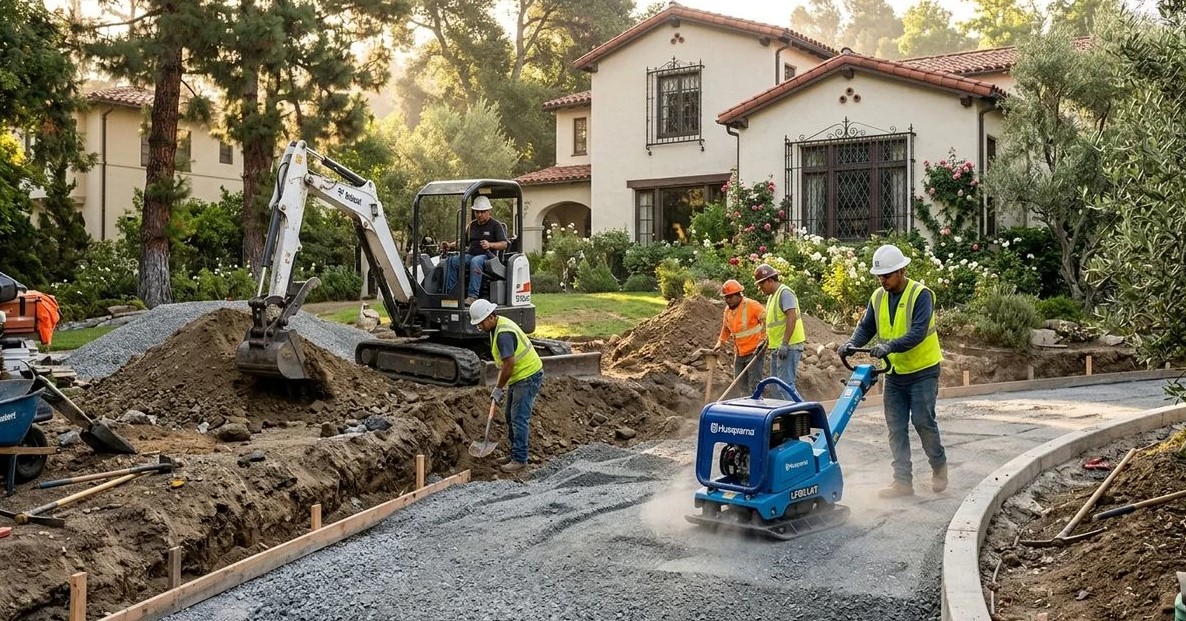
What to expect during a landscaping project in Arcadia depends on scope, but most homeowners underestimate the sequence. Demolition and rough grading go quickly. The slower part is coordination, especially when new hardscape, irrigation, lighting, drainage, planting, and gates or walls all intersect.
A modest front yard refresh might take a few weeks once construction begins. A full redesign with significant hardscape, masonry, custom entry work, or utility adjustments can run much longer. Permits may be needed for walls, electrical work, or major site changes. Material lead times also matter. Specialty pavers, large specimen trees, and custom metal elements can extend the schedule.
The best outcomes usually come from patience during the planning phase. Finalizing grading, drainage, irrigation zones, and material transitions before the crew mobilizes saves money and frustration. A rushed install often leads to change orders and compromises that show up years later.
Choosing a landscaping contractor in Arcadia becomes critical here. You want someone who understands local conditions, can speak clearly about irrigation and drainage, and has enough design sensitivity to execute details cleanly. Not every contractor who can pour concrete can build a refined modern front yard. Ask how they handle plant spacing, finish grading, lighting placement, and water management. Those answers tell you a lot.
The strongest Arcadia front yards feel settled from day one
A polished front yard does not need to look mature overnight. In fact, some of the best projects are intentionally edited at install so the plants have room to grow into the composition. What matters is that the framework feels settled immediately. The path should make sense. The materials should feel resolved. The planting should show rhythm, contrast, and confidence, even before it fills in.
That is what separates trendy upgrades from lasting design. Modern front yard landscaping ideas for Arcadia, CA work best when they are rooted in local climate, architecture, and daily use. Water-wise choices should be integrated, not apologetic. Native and drought-tolerant planting should feel designed, not improvised. Hardscape should clarify the house, not compete with it.
When those pieces come together, the front yard does more than improve curb appeal. It quiets the whole property. The house looks better proportioned. The maintenance burden drops. The landscape reads as intentional, current, and appropriate to Arcadia. And every time you pull into the driveway, it feels like the home has finally been introduced the way it deserves.