Foundation Repair in Austin, TX: 7 Questions to Ask Before You Hire a Contractor
Excellence in Austin.
Bats Foundation RepairExcellence in Austin.
Bats Foundation RepairAustin sits on some of the most temperamental ground in Texas, and homeowners here learn that lesson the hard way when a door stops latching or a hairline crack creeps across the drywall above a window. Searching for foundation repair in Austin is rarely a leisurely research project; it usually starts the week something visibly shifts. Whether you own a 1940s bungalow in Hyde Park, a renovated cottage in Govalle, or a newer slab-on-grade build out toward Del Valle, the questions you ask a contractor before signing anything will shape the next twenty years of that structure.
The neighborhoods that define this city each carry their own structural personality. Homes near Zilker Metropolitan Park and the Lady Bird Lake Hike-and-Bike Trail often sit on cut-and-fill lots where original grading has quietly migrated downhill over decades. Properties within sight of the Texas State Capitol dome tend to be older pier and beam construction with sill plates and cedar posts that were never meant to last a century. Understanding which category your home falls into is the first step toward asking a foundation contractor the kind of questions that actually reveal competence.
Central Texas weather does the rest of the work. Austin swings between saturating spring storms and brutal, rainless summers where the ground around a slab can lose several inches of moisture volume. That expansion and contraction cycle in local expansive clay is the single largest driver of slab movement across ZIP codes from 78702 through 78704 and 78745. A slab does not fail because concrete is weak; it fails because the soil beneath it moves unevenly, lifting one corner while another settles. Any contractor who cannot explain that mechanism in plain language should not be quoting your home.
Access matters too. From the East Austin office on Tillery Street, crews reach Mueller, Cherrywood, Windsor Park, and Holly in minutes, and run out I-35, US-183, or MoPac to Round Rock, Pflugerville, Manor, Buda, and Lakeway without losing half a day to traffic. That proximity is why so many residents searching for foundation repair near me end up with a local crew rather than a franchise dispatched from another metro. Response time affects diagnosis quality, warranty service, and how quickly a small problem stops becoming an expensive one.
Start with the simplest question of all: what is actually causing the movement? A qualified inspector will walk the perimeter, take elevation readings across the interior floor, check the drainage fall away from the slab, and look at trees, irrigation lines, and downspout placement before mentioning a single pier. If the first conversation jumps straight to a price per pier without a diagnosis, you are being sold a product rather than a solution. The right foundation repair specialist treats measurement as the entire foundation of the estimate. For a deeper breakdown of what those readings usually reveal, see our guide to common slab foundation problems in Austin.
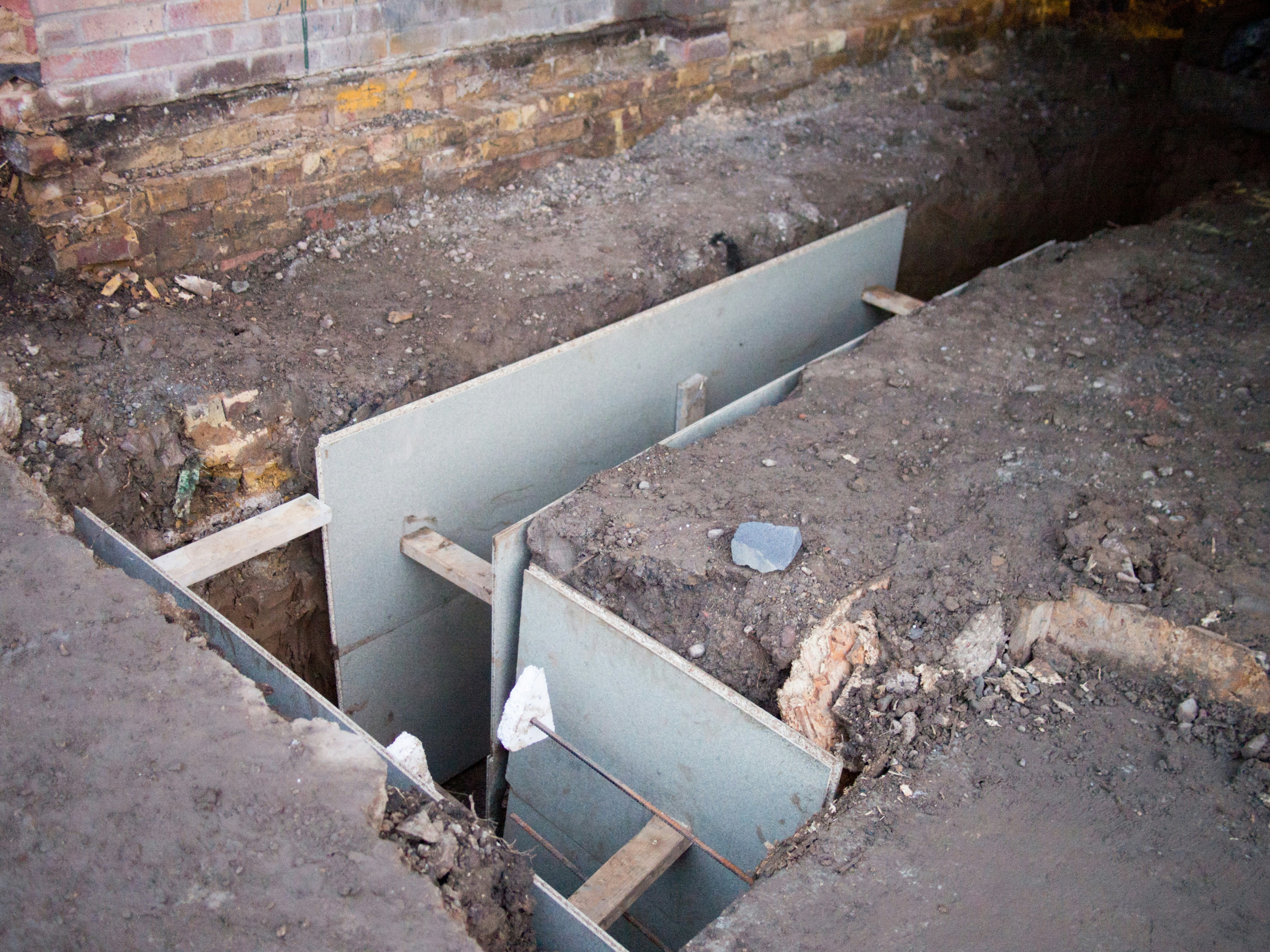
An engineer-reviewed plan changes the entire dynamic of a project. It establishes pier count, pier spacing, target lift, and the load path each pier must carry, and it gives you a document that a future buyer's inspector can read. Ask whether the engineer works independently of the contractor, whether a post-repair elevation report is included, and whether the plan will be provided in writing before work begins. In Austin's resale market, that paperwork routinely protects sale prices in Travis Heights, Bouldin Creek, and Allandale far more than the repair invoice alone ever could.
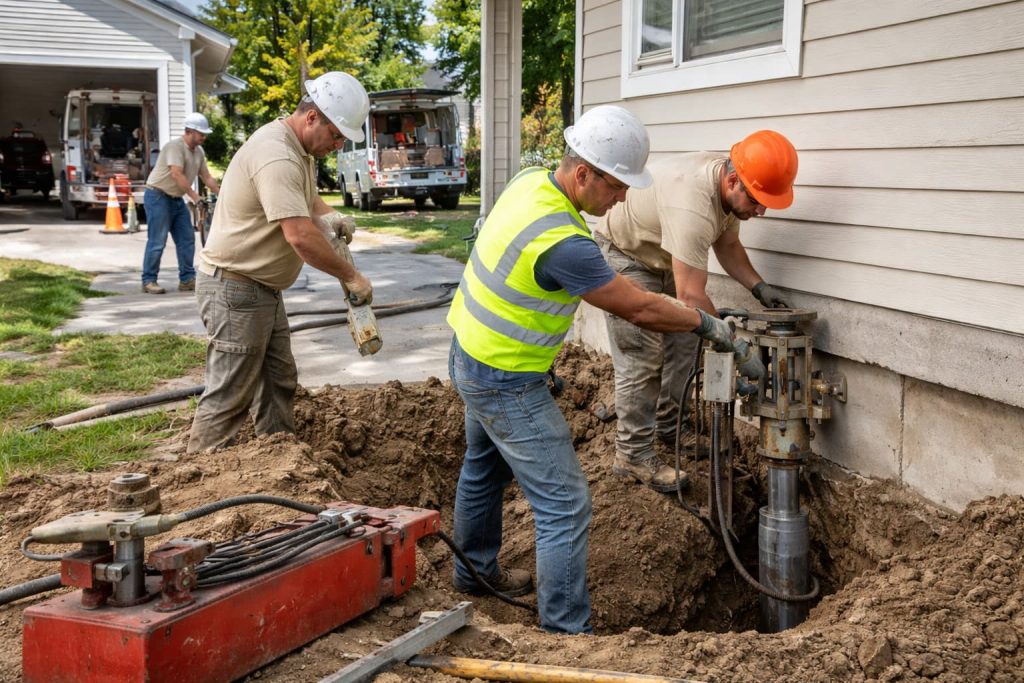
There is no universal pier. Concentrically driven pier systems, hybrid steel piers, concrete underpinning, pressed steel pilings, and sonotube piers each suit different soil depths, load conditions, and access constraints. A contractor should explain why your soil profile calls for one system over another rather than defaulting to whatever the crew installed last week. Homeowners comparing options and reading verified feedback about foundation repair austin tx will notice that specialists describe the reasoning, while generalists describe only the price.
Neighborhood experience is not a marketing line in this city. East Austin blocks around Govalle, Holly, and Cherrywood mix century-old pier and beam cottages with new infill slabs poured on lots that were regraded twice. A crew that has lifted homes on those streets knows where the utility runs sit, how narrow the side yards are, and which streets require careful access planning. That local track record shows up plainly in the reviews left by neighbors who searched for east austin foundation repair and then documented what the crew actually delivered.
Read the warranty document, not the brochure line. Ask whether it covers only the piers installed or the entire perimeter, whether adjustments carry a service charge, and whether coverage transfers to the next owner. Steel and hybrid steel pier systems here carry a lifetime transferable warranty with no adjustment charges during the first ten years on hybrid steel piers, and pier and beam repairs carry separate written terms. Transferability matters enormously when you list a home anywhere across Travis County, because buyers price uncertainty aggressively.
Lifting a slab without correcting the water behavior around it is a temporary fix. Ask whether the proposal includes grading corrections, gutter and downspout extensions, root barriers, or waterproofing where conditions call for it. In Barton Hills, Zilker, and Rosedale, where mature trees pull enormous volumes of moisture from clay during a dry August, drainage strategy often determines whether the repair holds. Homeowners researching foundation repair travis county should expect moisture management to appear in the scope, not as an afterthought.
The final question separates contractors who finish jobs from those who stand behind them. Ask about post-repair elevation documentation, the cosmetic repair timeline for drywall and trim, who to call if a door sticks six months later, and how quickly a service visit is scheduled. A specialist based in Austin answers that call the same week, not the next quarter. That accountability is the reason homeowners in Crestview, Windsor Park, and Tarrytown keep referring neighbors. Ready to find the right foundation repair in Austin? Contact Bats Foundation Repair, LLC at (512) 260-7182 today.
Bats Foundation Repair, LLC serves customers throughout Austin and Travis County, including East Austin, Hyde Park, Mueller, Central Austin, South Austin, North Austin, Cherrywood, Govalle, Holly, Travis Heights, Bouldin Creek, Zilker, Windsor Park, Crestview, Allandale, Rosedale, Barton Hills, Tarrytown, Clarksville, and Riverside, along with Pflugerville, Round Rock, Manor, Del Valle, Cedar Park, Georgetown, Buda, Kyle, Lakeway, Bee Cave, and West Lake Hills. Whether you're in Mueller or out toward Buda, our foundation repair team is nearby.